
Description
Currently there are no art works available.
This post is also available in: NL
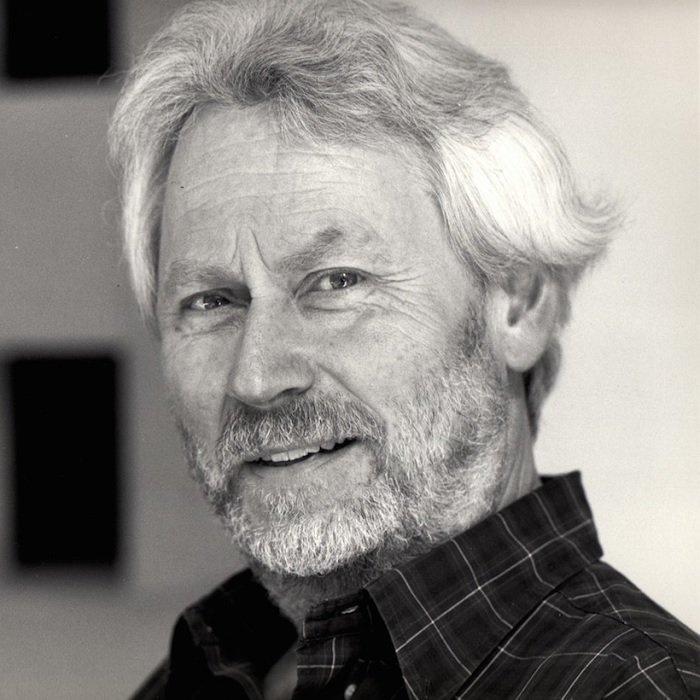

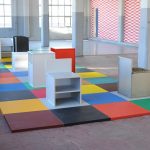
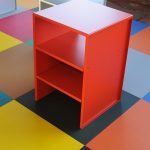
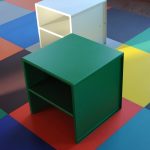
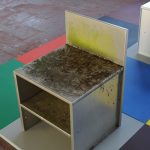
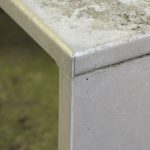
On an international level, Donald Judd (1928-1994) is one of the most important post-war artists, and one of the founders of the Minimalism movement. We are very proud to announce that we have entered into agreements with the Donald Judd Foundation, with offices in Marfa (Texas) and New York, to represent his work in the Netherlands.
Product Enquiry
For this year’s Dutch Design Week, JB was invited by Piet Hein Eek to build a new shed called the Lumber Camp. It is made from Piet’s leftover wood and JB’s colorful duct tape, with the help of some screws. JB’s abilities to adapt to any context helped him to create his own space, displaying his universe through recent works inspired from fantasy and video games.
This shed is made the same way as the furniture displayed inside, using the Bundle technique of tightening wood beams together with duct tape. Here, this Bundle technique is used on a larger scale. By looking closely at the construction, wobbly connections, visible screws and flaws can be seen to show the different steps of the process.
Visitors are welcome to come inside, have a look at the works, take a seat and enjoy a drink from the bar. This place is made for people to gather and relax. In this evolutive space, JB will be there to make tours of the shed and do construction performances during the week.
Website: www.jb-stuff.com
Instagram: www.instagram.com/persis_k
ZANDI
With sand as the basic material, Zandi has a special structure. A grainy material and one of the most common natural substances on earth has been transformed into a lighting object. Rock blocks become boulders, boulders become gravel and gravel becomes sand. Wind and water move sand grains and form sand shapes on the beach and in the dunes. The grinding effect of sand ensures that special objects are created. These sand shapes with matching layering are the starting points of the Zandi. These blocks can be printed using 3D printing technology. This means there are unlimited possibilities and the shapes are endless.
TRIGAMI
The Trigami collection focuses on one geometric shape: the equilateral triangle. Due to the strong properties of this triangular shape, architects regularly use it as a foundation. Sabine van der Ham has applied this triangle in an innovative way by folding it with origami techniques into an innovative lighting object. The material of the Trigami collection is ceramic, sustainable and completely recyclable. The Trigami hanging lamp is available in 5 colors. Please note: ceramic is a natural material, so each product is slightly different and may vary slightly in color shade. The ceramic lampshades of the Trigami hanging lamp are made by Cor Unum. This is a ceramics studio in ‘s-Hertogenbosch where beautiful ceramics from nationally and internationally known designers are made with great passion and craftsmanship. Cor Unum – literally: one of heart – is supported by many: by ambassadors and students, by designers and volunteers, by people at a distance from the labor market and professionals. They all share one common ideal: everyone deserves a place, everyone has a talent and everyone can contribute to making the world a better place.
Website: www.hetlichtlab.nl
What do a dilapidated sofa, broken floorboards and a rusty circuit board have in common? They are lying in the recycling yard waiting to be burnt. We, Dump Design, a collective of six designers, show another common denominator. Together, from different areas of expertise, we are investigating the potential of the environment street: The dumping ground for all waste. At our stand, you will see practical case studies that will inspire you. Jewellery from circuit boards, bags from sofas or a coffee table made from floorboards. Come and see the potential of the circular economy.
Embracing femininity and walking on the streets today is layered, urgent, and complex. There needs to be a safe space for reflection and discussion today. What are the movements, encounters, feelings, and experiences when walking in high heels in public space during the day and night? The project archives a series of walks in high heels from January to August 2023 and dives into the joys, dreams, pains and discomforts of being feminine and walking in high heels in the form of a live performance. The goal with this work is to create a platform and space where women and feminine people can freely walk on the streets no matter the time of day.
The entire collection is designed from a thought of simplicity and style. The elegant design puts the plant or object centre stage. This makes it an eye-catcher for both indoors and outdoors.
Designer Isabelle Schoenmakers – Leijser grew up as a farmer’s daughter among the meadows where there was always room for creative thinking and doing. While she considered this all normal as a child, she now sees how it has enriched her life. Happy Circle is her way of sharing nature and creativity. To share happiness.
At De KLEIN & VAN HOFF, we want to go back to basics. To well-made, comprehensible products that warm us, cook with and enlighten us.
This penchant for simplicity has nothing to do with nostalgia. The things we make stem directly from who we are. It is the way we have always looked at things and the world.
For us, no shiny gadgets or high-tech exteriors. We prefer to spend our time on projects and products that are close to ourselves and the user.
Small-scale, local production is the future. We are already making a start with practical, sustainable designs.
Long live buying for life.
Website: www.dekleinenvanhoff.nl
Social media: #dekleinenvanhoff
Together with the tapestry, Happy Kunst Garden (2022), Bom showcases twin lamps named Brand New Happiness(2023).
In the age of fast food, where speed and convenience dominate, ‘ Brand New Happiness mirrors quick access to happiness through consumerism.
Modern businesses persistently promote buying services and products in pursuit of happiness, governments emphasise individual happiness for the benefits. Wellness/happiness have transformed into commodities, becoming a form of psycho-politics that diverts attention from societal and political issues, driving people to chase the illusion of pursuit of happiness.
Brand New Happiness pulls a dialogue on individuals’ anxiety concealed beneath the facade of positivity promoted by the happiness industry.
Website: bomnoh.com
Instagram: @bomnoh
All jewelry is handcrafted in the attractive goldsmith studio “Atelier Aroha” in the historic Klokgebouw in Eindhoven. Our passion is creating responsible, beautiful and unique jewelry. Organic shapes and textures in harmony with precious gems and pearls, create unique nature inspired fine jewelry.
In the captivating world of art and design, “Harmony” stands as a testament to the profound impact of community on the rhythm of life itself. This presentation delves into the fusion of mental and physical expressions through a stunning array of shapes and colours, all carefully curated and brought
In the intricate tapestry of existence, our communities play an undeniable role in shaping the symphony of our lives. “Harmony” is an artistic exploration of this concept, an homage to the diverse voices, stories, and experiences that intertwine to create the vibrant rhythm of our shared existence.
“Harmony” encapsulates the essence of unity, coexistence, and interconnectedness. It serves as a visual and tactile reminder that, as individuals, we are each a unique note in the grand composition of our communities. Together, our diverse perspectives create a harmonious and ever-evolving melody. Every design invites you to explore the intricate dance between mind and body.
This collection has meticulously designed and handcrafted a collection of lamps and accessories that not only illuminate spaces but also our understanding of the world. Each item is a unique, as there exists only one copy of every creation in this collection.
Website: https://farzinkavaji.com/
Instagram: https://www.instagram.com/farzinkavaji/?igshid=xdf6966uu20h
We are excited to announce the launch of a collaborative furniture collection by Fiction Factory in partnership with designers Iñigo Puerta Uranga, Jesse Howard, and Paola Zanchetta. Crafted from waste material derived from Fiction Factory’s productions, we demonstrate various techniques for working with Found Objects components.
Found Objects is an open source design tool that transforms CNC wood-waste into a new building material. The tool creates unique components from the leftover sheet material in the CNC process: each component is generated to fill-in unused sheet-space before production begins. This means that while the exact shape of each component is unique – determined by whatever is being produced – the dimensions and general forms generated can be controlled: from organic and curvy to angular and geometric.
Our goal with this collection is to inspire others to utilize the Found Objects tool and material in their own creative projects.
Websites:
https://www.fictionfactory.nl/
https://inigopuertastudio.com/
Instagram:
https://www.instagram.com/
https://www.instagram.com/
Paulien Berendsen presents her latest project ‘Wanderlights; during DDW 2023.
Wanderlights are design candles like you’ve never seen before! Floating on their wicks, the candles create wonder and add a touch of magic to any space. This natural product is 100% Dutch Design and lovingly handmade in Paulien’s studio. An innovative concept for the design lover who can’t get enough of combining and wants to continue to be amazed.
Website: www.wanderlights.com
Instagram: www.instagram.com/
Our project started with an investigation into materials, waste and recycling, which resulted in a series of flat artworks with 3D elements. We translated this research into a marketable product to reach a larger group of people and not just leave it at a research or message. Our vision in this project is to create awareness about the value of reusing materials. The product we designed is a room divider made without residual waste. The design was determined by the waste material available (in collaboration with Mondilab). It is a puzzle, using all residual pieces in the screen. We will show a first prototype at Dutch Design Week, together with the earlier artworks.
Website: www.karsenboom.com
Home Base specializes in designing, building and installing patented garden offices and lodges in natural environments, such as in the forest or on the water. Whether you are looking for a tiny office, a tiny house, a lodge or a home, at Home Base we make your dreams come home. Our designs are stylish, environmentally friendly and sustainable. We strive to provide innovative solutions for people looking for a contemporary and conscious lifestyle. Our models feature smart and energy-efficient technologies so you can enjoy comfort and convenience while reducing your carbon footprint. At Home Base we believe that everyone has the right to live and work in an inspiring and sustainable environment. Contact us and discover how Home Base can help you realize your dream environment.
Website: www.home-base.co
Instagram: https://www.instagram.com/home_base.co/
Wheel is the record player that houses all technology underneath your record in a compact, minimal design.
Wheel turns counterclockwise and can be used upright.
Wheel is hand built by Peter, his son Piet and their team in Schagen, Noord-Holland. Wheel was a Dutch Design Award finalist at DDW 2017.
This time, we proudly show you how Wheel has evolved.
We’d love to show you all about Wheel and more!
See you at DDW 23 October 21-29 – Designer Exhibition – Atelier A1 – Piet Hein Eek factory – Eindhoven
Website: http://www.miniot.com
YOCHIYA presents a series of vases created by combining cloisonné, a traditional craft that is gradually being lost and has deep connections to Japan and Holland, with the highly improvisational contemporary techniques of welding and hydroforming.
Website: yochiya.co.uk
Instagram: https://www.instagram.com/y_o_c_h_i_y_a/
THE OWN YOUR OWN COLLECTION
With our latest collection “Own your own”, we want to set the industry on edge. We are at the forefront of our business, bringing the message that anyone who wants to walk in heels should be able to do so. A small-scale production of up to 200 pairs per colour. The pairs run up to size 46 and have a unique number. Shoes that enhance the person in who they are and what they are allowed to be. With our self-designed heels, we want to show diversity on different levels. The bold in the elegance.
Website: www.skuastudio.com
Instagram: https://www.instagram.com/skua.studio/
NINETY represents our commitment to locally sourced, adaptable furniture that provides the consumer with the option to interchange modular furniture pieces between varying styled collections. Simplicity is at the essence of each design. Every table is configured of four identical parts, manufactured using one process, adapting to interior space in several different ways. Each modular piece is cut from 4mm sheet aluminium, bent along two lines using an automated press brake, and finished either in a coloured powder coat, or a sandblasted texture. Each piece is fixed together using thumb screws, preventing the consumer from having to reach to their tool cupboard. Whether it’s creating funky aesthetic shapes, functional forms that integrate into a room, or keeping it minimal and doing nothing at all. Our goal is to provide boundless choice for users to customise their personal spaces.
https://www.instagram.com/ninetyfurniture/
https://www.ninetyfurniture.com/
https://www.linkedin.com/company/ninetyfurniture/
It’s not only about the final product, but also about the process.
It all started in collaboration with Tine De Cleer who has 20 years’ experience in fashion.
She knew from the inside that the fashion industry had reached a breaking point.
The studio’s philosophy is in line with the concept of slow fashion. I’m using artisanal techniques such as dyeing and handweaving to give a heart and soul to the garment.
It’s a small range of one-off pieces with a timeless aesthetic.
The garments are a mix of handwoven pieces in natural materials such as linen and wool together with high-quality deadstock fabric.
Linen is a part of my history; my grandfather was a Flemish flax worker.
They will be only on sale directly through events.
Website: www.jeudefil.be
Instagram: https://www.instagram.com/jeudefil.textiledesign/
Take good care of this egg but do not sit on it. Also no boiling.
Instructions: Before switching on for the first time, we advise you to yell ‘Cockadoodledoo’. Have fun.
A playful lamp made from actual eggs. As a fan Droog Design, Ruben de Haas create something simple and fun. These unique lightbulbs are surprisingly beautiful and interesting due to the imperfections of the eggshells.
Website: www.rubendehaas.com
Instagram: www.instagram.com/coloruben
Noranora.design presents the brand’s first product. The first product is the result of a quest to build the ultimate chair that delivers on our brand promises. This is literally years of experience at different brands in one chair. The design is archetypal, representing simplicity yet making a statement. A wide seat and back provide comfort for all users, while minimal curved details and open spaces keep the product elegant and light.
The frame is made of chromed steel and upholstered in high-quality vegan leather made from cactus plants. The entire structure is shipped in a flat box and is user-friendly to assemble.
Production currently takes place in Italy and some parts we assemble in the Netherlands.
Website: https://noranora.
This project came to life when we stumbled upon an abandoned chair on the side of the road. Determined not to let it go to waste, we meticulously crafted a pattern of the entire chair and utilized leftover wool from previous projects to create a circular aesthetic. This resulted in a unique and intricate pattern that serves as a second skin for the ‘doucette’ chair. Additionally, we utilized the chair’s pattern to create a complementary rug that mirrors the chair’s design.
Instagram: https://www.instagram.com/sameo.atelier/
BIRNE is a line of porcelain objects by ceramist Massimo Pavan. The aesthetic aims at a meticulous repetition of lines and simple forms in limited pieces and variations. A quiet reflection on simplicity and deep attention to detail distinguish his practice. Each piece is carefully and exclusively wheel-thrown.
Instagram: https://www.instagram.com/birne_ceramics/
AN „OOOOH“ WITH MANY POSSIBILITIES
“Ooooh” is made of 100% organic terry. And comes in three charming color combinations.
Like any ordinary towel, it has four corners. But only “ooooh” has a shapely hole in each corner.
This small difference turns “ooooh” into a bag, a towel for the deck chair or a non-slip shower towel. or a non-slip shower towel.
The holes also function as hangers. No matter whether coat hook, branch or door handle.
“Ooooh” can be casually hung anywhere.
It is space-saving, multifunctional and a 1A household aid: for example, as a laundry basket set.
It was originally created by designers Jan Dobmaier and Vincenz Warnke for exactly this purpose. The good piece is produced in limited edition in Turkey, certified according to BCI.
It is cuddly soft, 80 x 140 cm and washable at 40 degrees.
Website: www.studio6277.com
PIANI is a clearly designed storage space, sustainable and made to last: a delicate but sturdy frame construction made of high-quality material with changeable and interchangeable inserts that can make every shelf unique.
Website: www.bfgf.de
Instagram: https://www.instagram.com/
LinkedIn: https://www.linkedin.com/in/
Although he has always drawn, painted and photographed, Geert Slaats (1961) only became an artist at a later age. He works in fashion as a designer of sneakers and shoes. His artworks therefore revolve around the themes of fashion and street. He often starts from existing catwalk images or fashion ads. He edits them, makes them more abstract or adds new elements. Paradox: it is precisely what Slaats omits that shapes the image. He often works in mixed media and uses, among other things, residual materials from his shoe studio and sometimes even waste. His work thus connects in an original way with the comprehensive themes of recycling and circular art. Inner tubes become baseball caps, wood chips become couture dresses. The work is created intuitively through photography, drawing, painting and last but not least collage. Slaats’ work is graphic and powerful and exudes balance and simplicity. It regularly refers to the spirit of the pop art movements in art.
Website: www.geertslaats.com
Instagram: www.instagram.com/gerardusslaats/
High Vases are made from a single piece of fresh wood, carved by hand. After sculpting the final shape, the vases are burried into the ground to ensure a slow drying process and a unique colour as a result of the minerals in the earth. The size, colour and shape of High Vases allow to experience them as beings and to relate on a personal level.
Website: cengizhartmann.de
instagram: cengizhartmann
The designs of Isabel Quiroga are beloved for their combination of imagination and functionality. The designer’s focus is fixed squarely on the purpose of a product, but through her innovative slant on things she achieves the delicate balancing act of practicality and originality. Based in Amsterdam, she designs collections that combine vivid imagination and down-to-earth functionality.
Instagram: https://www.instagram.com/studioisabelquiroga/
Website: https://www.isabelquiroga.com/
Sebas Kops is inspired by decorative antique pieces of furniture. He uses this inspiration to create contemporary objects with stories. Craftsmanship is really important to him. He uses both old and new techniques to realise his pieces.
Website: https://sebaskops.nl
Instagram: https://www.instagram.com/
VAN-Jorn builds beautiful, self-assembly van campers based on its own line of interior modules. The modules are a counterpoint to typical motorhome interiors: no chipboard, veneer edges and chrome but solid wood, raw aluminium and matt corian. The modules have a recognisable design language with receding shapes at the hips and feet. The materials and clever ergonomics create beautiful lines and a warm atmosphere.
Website: www.vanjorn.com
Facebook: https://www.facebook.com/
Pinterest: https://nl.pinterest.com/
Instagram: https://www.instagram.com/
“Kaori to Kioku” is a design project based in Japan and the Netherlands.
We connect the worlds of craftwork and scent with the concept of redesigning traditional design.
The first collection features beautiful ceramic / lacquerware incense holders, some with botanical motifs using 100-year-old moulds and others made with traditional Japanese potter’s wheel techniques.
All incense sticks are 100% natural and plant-based. These organic incense sticks are free from petroleum-derived ingredients, synthetic colourants, synthetic dyes, and synthetic perfume.
website: kaoritokioku.com
instagram: @kaoritokioku
POKO is a sustainable multifunctional lamp that can both stand upright and hang from a shelf.
Website: www.poko-light.com
Instagram: @poko.light https://www.instagram.com/
Instagram: @vanplestik https://www.instagram.com/
Instagram: @lisavlamings https://www.instagram.com/
The operation of the construction can be traced back to the three dimensions, the x, y and z axis. There is a certain amount of pushing or pulling force on each axle, you must be able to understand these forces in order to see what happens. Once you understand that it is possible to block them, a construction is created.
From this line of thinking and a series of existing constructions, the concept was born to create a construction system that holds each other together by blocking all three-dimensional axes. No help is used from external already existing fastening materials.
This is a reference to an old technique they used to build wooden structures. This way of thinking or “embodied knowledge” was a matter of course at the time. The logic and simplicity are in danger of disappearing due to the norms and values that play a role in our time. For example, this project is about preserving this knowledge, but it also responds to the norms and values of the moment.
How can we use technology well to think like makers?
From these parameters we made a chair and stool by means of a CNC milling machine as our tool. Both share the same miter construction which is scalable according to the needs. By working with monomaterial, the recycling process is simplified and our dependence on suppliers is also limited even as the supply chain.
Website: https://www.structural-aspect.
Instagram: https://www.instagram.com/structural_aspect/
SENNES stands for North and South, Belgian linen and Portuguese wool, a new experiment from traditional craftsmanship.
Working exclusively with noble and ecological textile materials as the main guide to function and form.
A clean aesthetic in jackets and bags for men and women.
SENNES is globally inspired by climate change in nature and culture, therefore designed as an annual wardrobe.
A continuously growing collection where, with each series of bags and coats, high-quality woven fabrics, know-how and skills of ethno-cultural origin are studied and then interpreted in each individual design language.
A sustainable brand with an emphasis on quality.
SENNES is designed and handmade in Portugal by Nele De Block.
Website : https://www.sennes.org
Instagram : @SENNES_neledeblock https://www.instagram.com/sennes_neledeblock/
Facebook : https://www.facebook.com/sennes.org
Analog Fundamentals for Graphic Designers
A Practical Guide for Self-Sufficiency
Based on the core idea that a typographic design studio that designs and produces its own letters should also be able to make its own ink and paper. Analog Aesthetics explains how we can produce our own locally sourced paper and plant- and mineral based inks, in order to create our own parameters of design.
On the background of this exercise lies the need to face a global overly complex system of production, supply chains and restrictive industrial standards, that have shown their dangerous disruptive effects.
Analog Aesthetics is part of Novo Typo Offgrid, an ongoing research project about self-sufficiency and sustainability within the context of graphic design. The project started during the first lockdown in 2020 and is designed and produced within close proximity to Novo Typo’s Amsterdam studio. The project is described in the book Novo Typo Offgrid which is available through booksellers worldwide. The subsequent DIY-zine Analog Aesthetics will be launched in The Netherlands during Dutch Design Week at Piet Hein Eek.
Webshop: https://www.novotyposhop.nl/
Website: https://www.novotypo.nl/
Instagram: https://www.instagram.com/novotypo/
Facebook: https://www.facebook.com/novotypo/
MAKUS presents the first induction hob with extraction and colour at DDW 2023: the MAKUS Moon.
The designers at MAKUS have turned the induction hob into an interior piece. Induction in colour. This makes it possible to create even more harmony in an interior design. Stop by and take a look at the palette of designer induction hobs from MAKUS.
Website: https://makuskitchen.com/
Instagram: https://www.instagram.com/makuskitchen/
Central to the presentation is the jewellery line ‘Bicycle Rack’. The basic shape is a rearrangement of the ribs of a cube. Also on show are rough versions of a series of tall stools from a new furniture line.
How I work, what that has to do with autism, why the name of the presentation was changed and why there is a second presentation during DDW can be read on my site.
Website: www.ernadebie.com
LinkedIn: www.linkedin.com/in/ernadebie
Instagram: www.instagram.com/
Stylist: Roel Schagen
Photography: KlunderBie
Product and furniture designer Margriet Foolen (1982) started Studio Divers immediately after graduating from the Design Academy Eindhoven in 2006. Margriet mainly designs independently, but also works with Dutch and international labels. Inspired by function, nature, silhouettes and an interest in materials, simplicity and form, Margriet designs pure and smart designs.
Website: www.margrietfoolen.com
Instagram: https://www.instagram.com/
Zerogloss kitchen combines an easy-to-assemble and minimal material system with an understated aesthetic, inspired by a sense of simple living, both in style and usability. A kitchen that naturally connects to relationships, functions and spaces of daily life with a close, human attitude.
The series is based on a system that assures an efficient and responsible use of resources, a simple assembly process and flat packaging. Two steel frames, one front and one back, are connected through a series of brackets with a double function of structural fastening and support of storage elements and appliances. Using only mechanical fixings for every component, the system avoids the use of chipboard inner panels and any kind of glue. We made it simple to assemble and disassemble to potentially replace a worn-out piece or move the entire kitchen in a new house and to allow an effective separation and recycling of each part at the end of its lifespan.
Zerogloss kitchen range includes a series of low units and columns that can be arranged in different configurations with drawers, cabinets and appliances. We strive to create a design rooted in simplicity, clarity, and functionality that stands in the living space with sobriety, and ease, yet retains its nomadic and distinctive identity.
Zerogloss is a design and manufacturing studio committed to creating highly functional and carefully crafted pieces through honest materials and subtle interventions. We focus on smaller spaces and modular, transportable structures in our search for a reversible process, where the product can be easily disassembled, relocated and recycled and the materials endlessly reused. Working in our own workshop and in collaboration with local manufacturers, we try to take care of our land and community.
Website: www.zerogloss.com
Instagram: www.instagram.com/zerogloss
For visual artist Amber van Rangelrooij, it is absolutely clear: art cannot exist without marketing. Indeed, for her, marketing itself is art.
Amber is researching how to use the marketing of big brands like Prada and Gucci to get attention for her work. With this in mind, she has chosen to profile herself from a brand name: Aesthetic Studios. This allows her to create more distance and volume and draw attention to the miraculous power of marketing.
Within her brand Aesthetic Studios, she designs and makes ceramic (interior) objects, among other things. Iconic, contemporary, tasteful – Aesthetic Studios products represent the pinnacle of craftsmanship and is unsurpassed for its usable design and attention to detail.
A new collection will be launched during Dutch Design Week 2023; The Presentation Collection. The collection is an investigation in which Amber experiments with glass, ceramics and function. The object can function as a vase and upside down as a column. A functional object that can be used as a presentation in itself.
Come and visit the world of Aesthetic Studios!
Pushing the boundaries of delicate materials
Studio Fleur Peters, Iris Lucia Design and Emma Hoogstede are three individual design studios with a shared interest in exploring delicate materials such as glass, thinly printed plastic and ceramics. New products will be introduced during Dutch Design Week, such as Fleur’s new series of glass ‘Lolly spoons’, Iris’ series of vases ‘Delft blue’ made of 3D-printed bioplastic and Emma’s ‘Coasters’, woven colorful ceramic coasters.
https://www.studiofleurpeters.nl
https://www.irisluciadesign.com
https://emmahoogstede.com
outil.li was born from the ambition to renew the way we produce and consume everyday objects. We draw inspiration from the heyday of industrial design, when designers such as Dieter Rams and Ettore Sottsass were responsible for objects characterised by honesty, playfulness and intrinsic quality. outil.li strives to rediscover these values for our current times, a time when there is a clear need for a new sustainable approach to development and production.
By using small-scale digital production, recycled materials and by integrating the processes of development and production, we have developed a lamp as an object of use. A voluminous pendant lamp with lightweight construction and direct table operation offers perfect light in any context.
Website: www.outil.li
Instagram: www.instagram.com/outil.li
Our project is focused on solving problems through folding. Folding can be a way of simplifying production, reducing waste, and making something beautiful and engaging. Our collective core values include consuming responsibly while actively taking part in forming the things around us. We have designed several pendant and table-top lamps, made from bioplastics, that arrive flat and are folded into form by the end user. Visitors to our exhibit will see our work up close, both in flat and folded form.
Website: https://www.wasatchdesigncollective.com/
Instagram: https://instagram.com/wasatchdesigncollective/
IKONIC creates new, playful products and concepts with well-known designers. The products should inspire children and adults to think outside the box, and experience the creativity of playful design.
Ikonic aims to create new, iconic design classics, using the creativity of contemporary designers to develop collections that stand the test of time. We strive for sustainability, not only through the use of sustainable materials, but especially through the user establishing a relationship with the object. As a result, the product is cherished, preserved and passed on to the next generation.
Designers such as Floris Hovers, Kiki & Joost, Richard Hutten, Studio Kars + Boom and Joost Swarte design for Ikonic.
Playful. Minimalistic. IKONIC.
Website: www.ikonic.shop
Instagram: https://www.instagram.com/ikonic__design/
Pinterest: https://nl.pinterest.com/ikonic_design/
I describe the concept behind his work as follows: “Everybody owns some kind of memorabilia – a souvenir from the last vacation or photos of friends and family. They often remind us of bygone events that are very precious to us. Even if we are not able to turn back the hands of time, it’s these objects that help us to bring back those enjoyable memories. To be precise: We don’t even have to choose memorabilia by ourselves. How often do we encounter an object, a smell or a taste by sheer coincidence, that suddenly reminds us of something special. Furniture manufacturing has a similar meaning to me.
I want my furniture to cause a positive reaction. What exactly that is, I can’t and I don’t even want to decide. Many people told me, that the way I build my furniture reminds them of their childhood construction kits. I never played with those kind of toys, but I can relate to it, when they say, that it brings back memories of being carefree and playful. Manufacturing my furnitures is like a game to me. I might draw a rough sketch at the beginning, but the finished furniture rarely looks like I planned it in advance.This is very important to me. If I wouldn’t work like this, I would deny myself the freedom to stray from the original path and to discover new things along the way. If nothing else, I really think that it’s this curiosity and openness, that made our childhood such a pleasant experience, that we love to remember.
Website: https://shigekiyamamoto.
Mail: mail@shigekiyamamoto.com
Instagram: shigeki__yamamoto/